ADHD does not live in a neutral body
A few days ago, I received a review of ADHD Body & Mind that made me stop and think.
The reviewer said the book was not for her, which is perfectly fair. No book is for everyone. I have never expected every reader to like my voice, my framing, or the way I bring science and lived experience together. That’s not the issue at all.
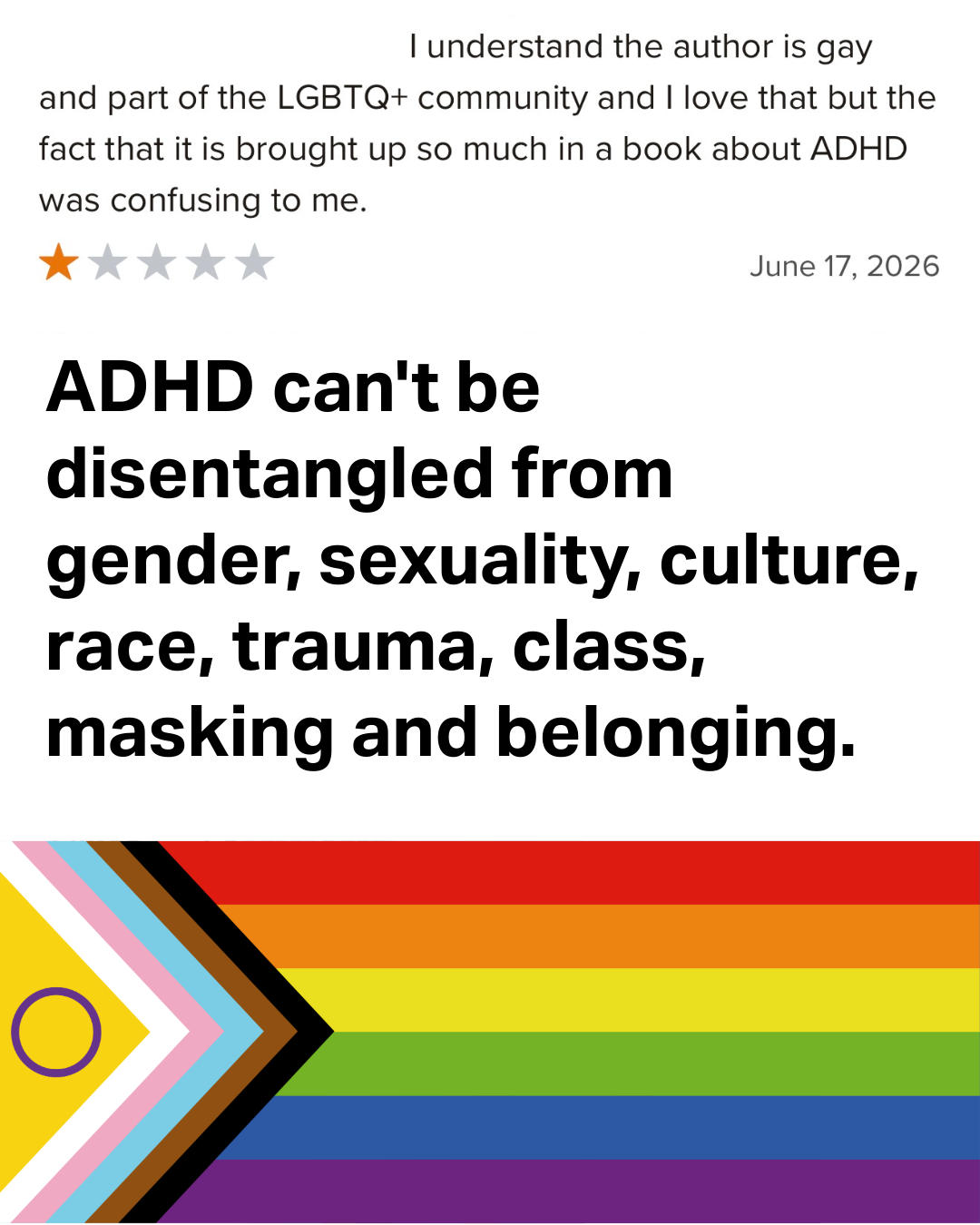
What stayed with me was something more specific. She wrote that she understood I was gay and part of the LGBTQ+ community, and that she “loved that”, but that she found it confusing that this came up so much in a book about ADHD. She said that if it had been a personal memoir, she would have understood, but that this was a book based on ADHD.
ADHD is not a selective experience
I have been reflecting on that because I think there is something important here. The back cover of my book makes clear that it blends science, lived experience and compassion. That was always the premise. I didn’t want to write the detached textbook I had first imagined. I tried, and then I got bored, because ADHD is not a selective experience. You can’t focus on dopamine, pun absolutely intended, and then ask the person’s identity to leave the room. That’s why I wrote a science-informed, body-aware, neuroaffirming book that asks what ADHD feels like when it is lived in an actual person, with a body, a history, a nervous system, a culture, a set of relationships, and a lifetime of trying to belong.
So the question, for me, is not whether a reader is allowed to dislike the book. Of course, they are! At the tender age of 53, I’ve had plenty of time to get used to the fact that not everyone is going to love me, just as I don’t love everyone. And that’s all good! The question is why queerness became the part of my lived experience she felt the need to single out as confusing, repetitive or excessive. And that’s why I keep coming back to Walt Whitman’s words: “I contain multitudes.” Because we all do.
ADHD can’t be edited to suit someone’s needs
Multitudes matter. ADHD does not float above the body as a neat clinical category. It does not arrive separate from gender, sexuality, race, class, trauma, hormones, age, masking, shame, family systems, cultural expectations or access to care.
If an ADHD book were written by a Black woman describing how race shaped her diagnostic journey, would we say she kept going on about her Blackness? If a perimenopausal woman wrote about how hormones changed her attention, sleep and emotional regulation, would we say she kept making the book too much about womanhood? If a working-class ADHDer wrote about the financial barriers to diagnosis and support, would we call that a detour from ADHD? I hope not… Because those realities determine whether someone is recognised, dismissed, pathologised, believed, supported or left to work it all out alone. So no, those are not “decorative extras”, and the science on this is not marginal, emerging, or some new fashionable add-on to ADHD awareness. It is well reported across the literature.
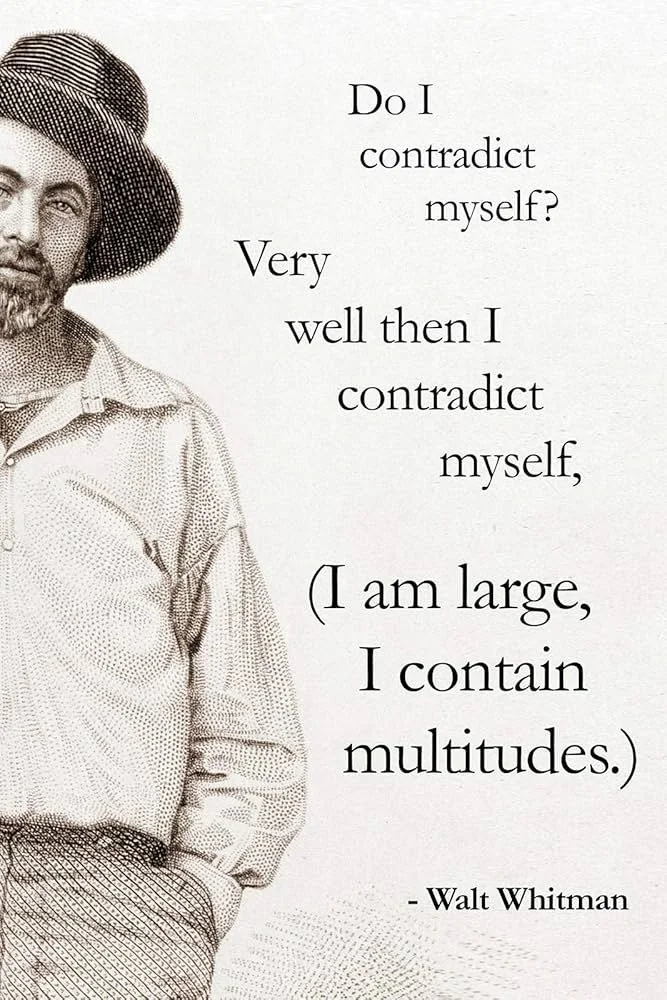
Originally published in 1855 as part of Leaves of Grass, the North American poet was well ahead of his time and wrote about life, freedom and same-sex relationships, amongst other things…
You can ignore the science, but it’s still there…
We know that ADHD can be missed or misread in women and girls, especially when their distress is internalised, masked or explained away as anxiety, emotionality or personality. We also know that hormonal transitions, including perimenopause and menopause, can change the felt experience of ADHD. I could go on, but I’ll just highlight a couple more examples… The way that race and ethnicity affect who gets diagnosed and when is well reported in scientific literature, as is the impact of socioeconomic disadvantage and how it influences the availability of support, access to services and the ability to articulate needs in systems that are already hard to navigate for most people.
Oh, and I don’t want to bore you with my queerness, but sexual and gender minority people carry additional layers of minority stress, masking, hypervigilance and trauma. So for us queer ADHDers, masking is not always only about hiding distractibility, emotional intensity or executive function differences. It is about editing our voice, our body, our desires, mannerisms, tenderness, anger, and visibility because somewhere along the line we learned that someone might find us too much, too visible or too inconvenient. So that’s your brief introduction to double-masking and the emotional and cognitive exhaustion that it can bring about… This can impact the nervous system, influencing food choices, sleep, stress, relationships, self-trust, burnout and the way someone learns to read safety in other people.
If you only want an ADHD book that talks about foods to increase dopamine and leaves identity at the door, that is your choice. But that is a bit like claiming to be an ardent Kylie fan because you like Padam Padam, while pretending the entire 1987 to 2023 catalogue never happened.
So no, queerness is not separate from ADHD and, as a scientist and queer person, I can’t just disentangle the bits that might be less palatable for some. I am just stating the facts. And because this is not only a personal feeling, I’ve added a tiny sample of the science at the bottom of the article, including research on race, socioeconomic disadvantage, gender diversity, trauma and (peri)menopause in ADHD.

Science, story and nourishment for neurodivergent life, straight to your inbox.
The point is bigger than queerness
In fact, this matters for everyone because intersectionality isn’t a special-interest topic. It is what happens when we remember that humans are never only one thing.
As another example, a cis heterosexual man over 60 with ADHD has intersections too. Age, masculinity, social expectations, physical health, emotional literacy, retirement, work identity, alcohol use, loneliness and the way men are taught to speak, or not speak, about distress all matter. A young autistic ADHDer in a low-income household has a different set of pressures. A woman of colour going through perimenopause while trying to get an ADHD assessment has another. A trans ADHDer navigating healthcare systems that may not feel safe has another. And none of this is boring, irrelevant or separate from ADHD. This is ADHD.
Neuroaffirming work acknowledges EVERY part of us
If we are serious about being neuroaffirming, we cannot only affirm the parts of neurodivergence that feel easy to digest. We have to respect people’s intersections, including gender identity, sexuality, race, culture, age, class, trauma, hormonal life stage and the many other forces that shape how someone experiences themselves and the world.
I think this is especially important inside ADHD coaching, therapy, education and workplace support. It is possible to know a lot about ADHD and still miss the person in front of you. You can talk about dopamine, executive function, emotional regulation and masking while failing to ask what the person has had to survive in order to sit in the room with you. It is possible to be ADHD-aware without being truly neuroaffirming. That is what this review has clarified for me.
So, rather than edit myself, I am going to deepen the work.
This experience has made me look again at the material I teach inside the ADHD-informed coaching training I co-deliver with Rosie Turner. The training already treats ADHD as a whole mind-body experience, bringing together the nervous system, masking, burnout, shame, safety, food, self-worth, emotional regulation and the gut-brain connection. But I want the intersectional piece to become more explicit, because good ADHD support has to see more than symptoms.
Coaches need to understand the life around the ADHD, not only the ADHD itself. The person in front of us may be carrying histories of exclusion, poverty, racism, homophobia, transphobia, hormonal change, trauma, medical dismissal or years of being told they are too much. Those realities shape capacity, trust, regulation and the kinds of support that feel safe enough to receive.
That is the kind of work Rosie and I want this training to hold.
We’re hosting a free live Q&A about the ADHD-informed coaching training on Tuesday 30 June at 6 pm UK time. We’ll talk about what the training involves, who it is for, and how it helps coaches, therapists, HR and wellbeing professionals, and ADHDers themselves work with ADHD in a more informed, practical and compassionate way.
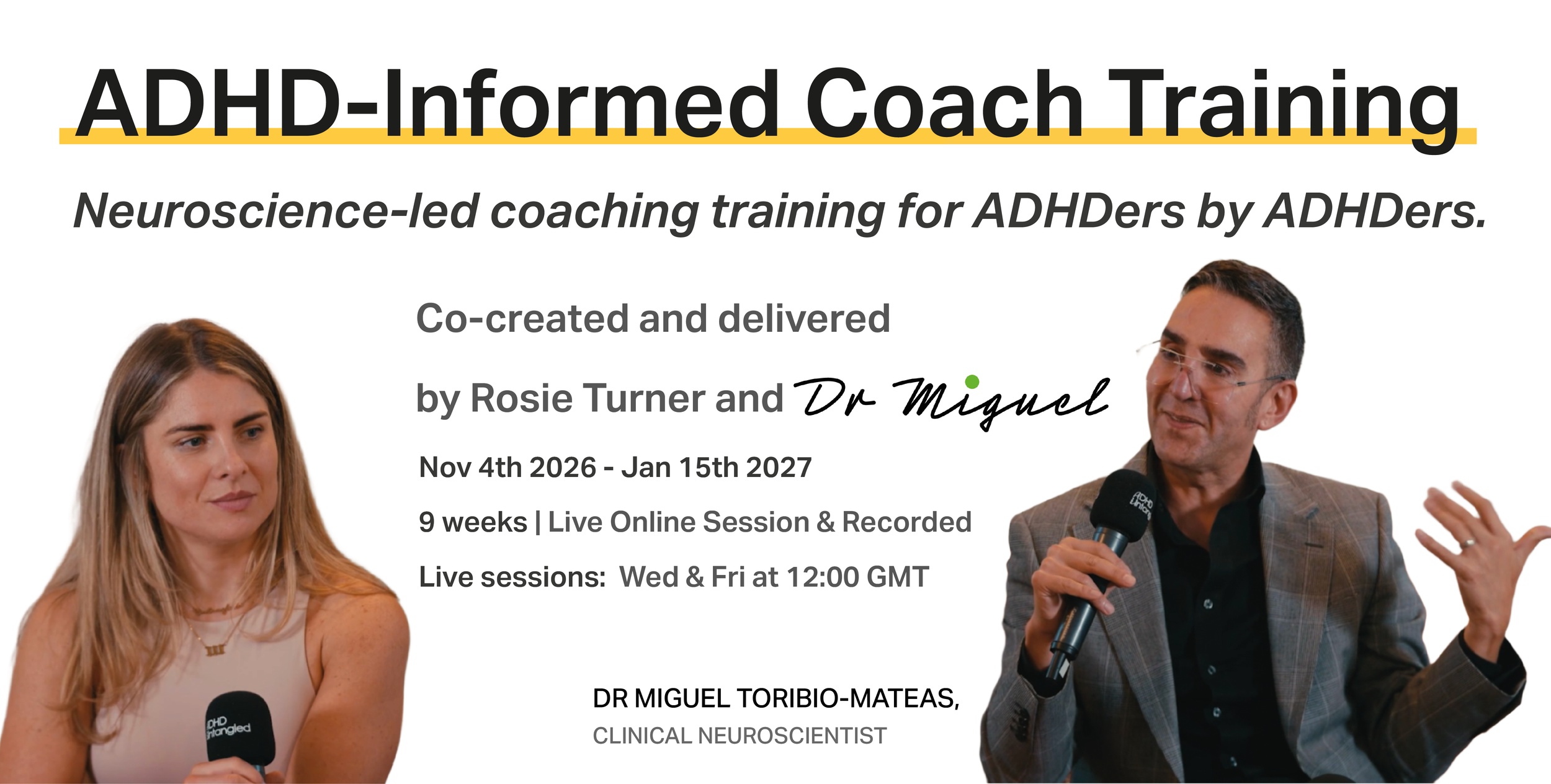
I am running a free live Q&A on the ADHD-Informed Coach Training Certification with Rosie Turner on Tuesday 30th June. Are you coming?
It is free to attend, and if you’re interested in becoming an ADHD-informed coach, I’m sure you’ll find it super interesting! I hope to see you there!
Rosie and I will be discussing our upcoming training and answering any questions you may have. Learn more about becoming an ADHD-Informed Coach with us here.
Committed to sharing the science AND the intersectionality of ADHD
Anyone supporting ADHDers needs to understand that lived experience is not an anecdotal inconvenience. It is data with a body attached. Indeed, it tells us where the science needs to become more precise, more ethical and more human. That’s why I will be even more mindful of the intersections that ADHDers inhabit in all my trainings going forward.
And yes, I am grateful for the reflection this review has prompted, even though I would much rather queer lived experience were not treated as excessive in an ADHD book. What the experience has given me is a clearer sense of what needs to be named more deliberately in my teaching. ADHD conversations need room for queerness, race, class, menopause, ageing, masculinity, trauma and the many other realities that shape how people are seen, assessed and supported. Diagnosis is never only about symptoms. Symptoms are always interpreted by someone, within a system, through a cultural lens. That matters, and I want my training to make more space for it.
So, I’m not prepared to shut up about that. If anything, I am more committed to saying it carefully, scientifically and with enough humanity for people to feel less broken and more informed.
With love and gratitude,

Some of the science on ADHD intersectionality
Annotated by yours truly
Russell, A. E., Ford, T., Williams, R., & Russell, G. (2016). The Association Between Socioeconomic Disadvantage and Attention Deficit/Hyperactivity Disorder (ADHD): A Systematic Review. Child psychiatry and human development, 47(3), 440–458. https://doi.org/10.1007/s10578-015-0578-3
This systematic review looked at 42 studies on childhood ADHD and family socioeconomic disadvantage, including parental income, education, occupation and marital status. Most of the studies found a link between disadvantage and ADHD. In the meta-analysis, children from lower socioeconomic backgrounds were up to 2.2 times more likely to have ADHD than children from higher socioeconomic backgrounds.
The important point is that ADHD is not only about biology in isolation. Social conditions matter. Poverty, parental stress, parental mental health, maternal smoking during pregnancy and wider family pressures may all determine risk, recognition and support. This doesn’t imply that disadvantage directly causes ADHD in a straightforward manner. Rather, ADHD exists within specific social conditions which can impact both development and access to support.
Shi, Y., Hunter Guevara, L. R., Dykhoff, H. J., Sangaralingham, L. R., Phelan, S., Zaccariello, M. J., & Warner, D. O. (2021). Racial Disparities in Diagnosis of Attention-Deficit/Hyperactivity Disorder in a US National Birth Cohort. JAMA network open, 4(3), e210321. https://doi.org/10.1001/jamanetworkopen.2021.0321
This large US cohort study followed 238,011 children and found clear racial and ethnic differences in ADHD diagnosis and treatment. Compared with White children, Asian, Black and Hispanic children were significantly less likely to be diagnosed with ADHD, even after adjusting for sex, region and household income. White children were also more likely to receive treatment after diagnosis.
In plain English, this suggests that ADHD is not being recognised or treated equally across racial and ethnic groups. Some children may be missed, misunderstood or unsupported because of how symptoms are interpreted by families, schools, clinicians and systems. This matters because ADHD care is never only about symptoms. It is also about who gets believed, who gets assessed, and who gets access to treatment.
Goetz, T. G., & Adams, N. (2024). The Transgender and Gender Diverse and Attention Deficit Hyperactivity Disorder Nexus: A Systematic Review. Journal of gay & lesbian mental health, 28(1), 2–19. https://doi.org/10.1080/19359705.2022.2109119
This systematic review looked at the overlap between ADHD and transgender and gender-diverse experience. The authors found that only 17 articles had been published on this topic since 2014, which is strikingly low considering that scientific publications on ADHD are booming. The existing literature suggests higher ADHD prevalence among transgender and gender-diverse people, but the research is still limited. The authors also noted that none of the studies avoided deficit-based framing, and none clearly included transgender, gender-diverse and ADHD people as authors.
The key message is that this intersection matters, but the science has not yet caught up with people’s lives. Trans and gender-diverse ADHDers exist, and their experiences deserve more than being treated as a clinical curiosity. We need research that is more participatory, more respectful and less pathologising.
Jakobsdóttir Smári, U., Valdimarsdottir, U. A., Wynchank, D., de Jong, M., Aspelund, T., Hauksdottir, A., Thordardottir, E. B., Tomasson, G., Jakobsdottir, J., Lu, D., Nevriana, A., Larsson, H., Kooij, S., & Zoega, H. (2025). Perimenopausal symptoms in women with and without ADHD: A population-based cohort study. European psychiatry : the journal of the Association of European Psychiatrists, 68(1), e133. https://doi.org/10.1192/j.eurpsy.2025.10101
This recent population-based cohort study compared perimenopausal symptoms in 535 women with ADHD and 4,857 women without ADHD. Women with ADHD had higher overall perimenopausal symptom scores, 18.0 compared with 13.0. They were also much more likely to report severe perimenopausal symptoms, 54.2% compared with 30.1%. The differences were seen across psychological, somatic and urogenital symptoms, and were especially marked in women aged 35 to 39.
Simply put, this study suggests women with ADHD might experience perimenopausal symptoms more intensely and potentially earlier than those without ADHD. This is significant because hormonal changes can impact sleep, mood, attention, emotional regulation, body temperature, anxiety, and overall capacity. For ADHDers, this can make an already sensitive nervous system harder to live in. The fact is that menopause is not a side topic in ADHD. Ask any menopausal ADHDer, and they’ll tell you how this is an inextricable part of their ADHD experience.
Attoe, D. E., & Climie, E. A. (2023). Miss. Diagnosis: A Systematic Review of ADHD in Adult Women. Journal of attention disorders, 27(7), 645–657. https://doi.org/10.1177/10870547231161533
This review matters because it looks at what happens when women live for years with undiagnosed ADHD. The review found themes around social and emotional wellbeing, difficult relationships, lack of control and self-acceptance after diagnosis.
In plain English, this supports the point that ADHD is not interpreted in the same way across gendered lives. Many women are not missed because they have no ADHD traits, they are missed because their distress, masking and coping are read through the wrong lens.
Zhang, N., Gao, M., Yu, J., Zhang, Q., Wang, W., Zhou, C., Liu, L., Sun, T., Liao, X., & Wang, J. (2022). Understanding the association between adverse childhood experiences and subsequent attention deficit hyperactivity disorder: A systematic review and meta-analysis of observational studies. Brain and behavior, 12(10), e32748. https://doi.org/10.1002/brb3.2748
This review is important because it links ADHD to adverse childhood experiences, particularly the cumulative impact of early stress and trauma. It doesn’t suggest trauma “causes” ADHD which would be overly simplistic. Instead it implies that ADHD and adversity can intertwine during development, influencing behaviour, attention, emotional regulation and how children are perceived by adults. Anyone working with ADHDers needs to understand that supporting ADHD effectively requires acknowledging the history of threat instability or invalidation someone may have endured.
Cénat, J. M., Blais-Rochette, C., Morse, C., Vandette, M. P., Noorishad, P. G., Kogan, C., Ndengeyingoma, A., & Labelle, P. R. (2021). Prevalence and Risk Factors Associated With Attention-Deficit/Hyperactivity Disorder Among US Black Individuals: A Systematic Review and Meta-analysis. JAMA psychiatry, 78(1), 21–28. https://doi.org/10.1001/jamapsychiatry.2020.2788
This review challenges the assumption that ADHD is less common among Black individuals. Across 21 studies, the authors found a pooled ADHD prevalence of about 15% among US Black individuals and argued for better assessment, accurate diagnosis and culturally appropriate care.
The discussion also points to the way race, socioeconomic status, discrimination, microaggressions and access to services can shape ADHD recognition and care. This is exactly why ADHD cannot be separated from social context.
Sorry Skyler on Goodreads if you also find this boring or repetitive babes… It is what it is…